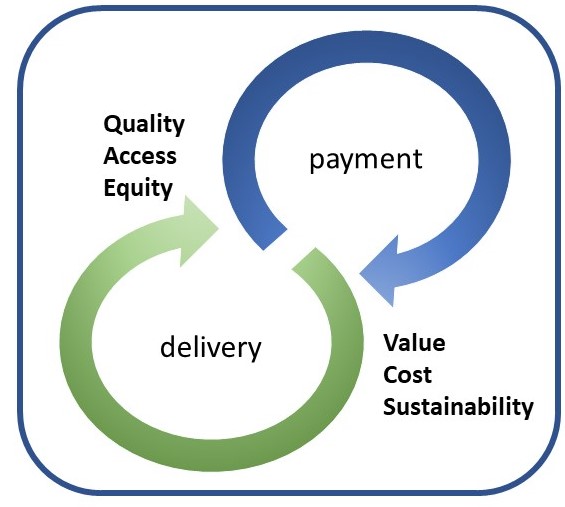
Serving as a national resource for payment and delivery system reform for substance use disorder treatment
Funded by the
National Institute on Drug Abuse (NIDA), The Brandeis-Harvard SPIRE Center to Improve System Performance for Substance Use Disorder Treatment is a partnership of the Heller School's Institute for Behavioral Health, part of the Schneider Institutes for Health Policy and Research, and Harvard Medical School's Department of Health Care Policy. With leadership by Sharon Reif (Brandeis) and Haiden Huskamp (Harvard) that builds on Founding Director Connie Horgan's long tenure as PI, and an outstanding team of collaborators, the Center will advance our understanding of SUD treatment delivery and payment systems. The Center's 2022 renewal brings a focus on low-barrier access to care, diverse populations, stakeholder engagement, and supporting early career investigators.
Stay up to date on SPIRE Center news, events, and opportunities

“The healthcare delivery system is changing extremely rapidly, and we want to make sure that treatment for people with substance use disorders has a place at the table and is part of the innovation that’s happening, and that we build the research portfolio that supports these innovations, such as payment, financing and quality of care.”
- Constance Horgan, Founding Director